
The Artisian Hiring Boom
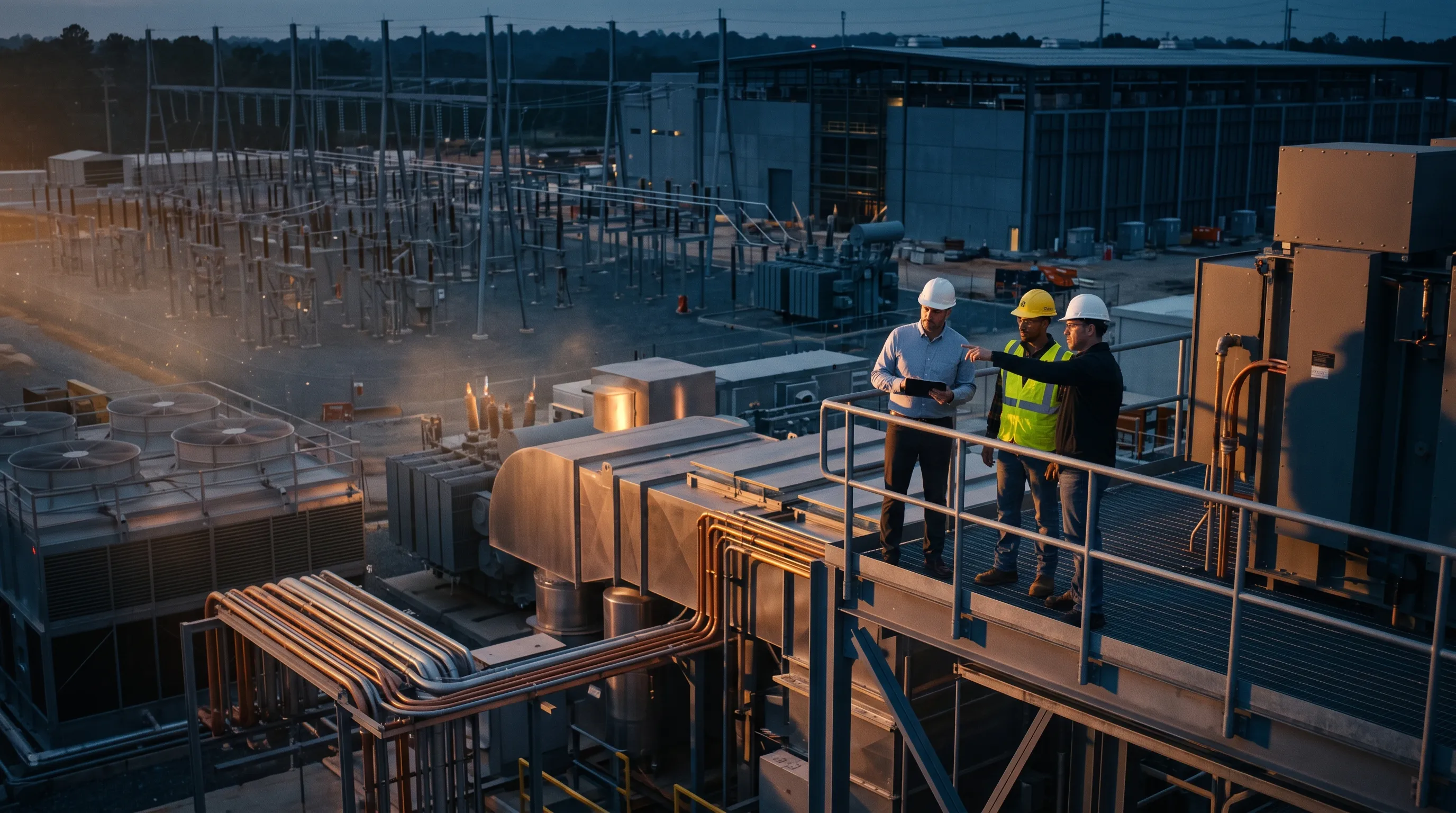
AI's physical infrastructure boom is creating massive demand for skilled tradespeople—electricians, HVAC techs, welders, and machinists—faster than workers can be trained.
The dominant employment story of artificial intelligence is displacement. Software can now perform work that once required analysts, coordinators, programmers, researchers and administrators, and it is reasonable to expect that some categories of knowledge work will require fewer people as those capabilities improve.
But that is only half of the labor-market story. AI is also producing an enormous physical buildout, and physical systems still have to be constructed, energized, cooled, maintained and repaired. The result is an increasingly visible shortage of people whose expertise exists at the intersection of technical knowledge and the physical world.
Electricians. HVAC technicians. Industrial mechanics. Welders. Millwrights. Controls technicians. Pipefitters. Machinists. Field-service specialists. Skilled construction supervisors.
The better word for many of them is artisans.
Not because the work is quaint or nostalgic. The opposite. An artisan is someone whose value comes from mastery: learned technique, accumulated judgment and the ability to solve a physical problem when the manual is incomplete and reality refuses to cooperate.
The AI economy is creating a hiring boom for exactly that kind of worker.
The Numbers Are Beginning to Catch Up With the Narrative
The Bureau of Labor Statistics’ new 2025-2035 projections provide a useful view of where the physical economy is headed. Construction and extraction occupations are projected to add approximately 385,700 jobs over the decade, with about 587,000 openings each year when growth and replacement needs are combined. Installation, maintenance and repair occupations are projected to add another 352,700 jobs.
Electrician employment is projected to rise by approximately 75,900 jobs, or 9.2 percent, with about 72,700 openings annually. HVAC and refrigeration mechanics and installers are projected to add approximately 48,200 jobs, or 10.9 percent, with about 40,600 openings each year. Industrial machinery installation, repair and maintenance occupations are projected to add approximately 78,800 jobs, a 14.4 percent increase.
Those annual-opening figures require an important distinction. They are not all newly created positions. Many reflect retirements and workers moving to other occupations. But from an employer’s perspective the distinction does not make the hiring problem disappear. A position vacated by a 30-year electrician is still a position that must be filled, and replacing accumulated judgment is often harder than adding headcount.
The infrastructure behind AI is now part of the demand. BLS projects utilities to be the fastest-growing major industry sector through 2035 and specifically identifies rising electricity demand, including demand associated with AI, as an important driver. It projects the computing infrastructure, data processing and web-hosting industry to grow 25.1 percent and add approximately 120,400 jobs over the decade.
The Cloud Has Become a Construction Project
Artificial intelligence may feel weightless at the user interface, but the capital expenditures behind it are intensely physical. Data centers require land, utility interconnections, generation, transmission, substations, switchgear, backup power, cooling, piping, controls, fiber and constant maintenance. They require concrete and steel before they require tokens.
That buildout is already colliding with a constrained labor market. In a September 2026 survey by the Associated General Contractors of America and NCCER, 87 percent of responding contractors reported openings for hourly craft positions. Among firms with craft openings, 88 percent said those jobs were as difficult or more difficult to fill than a year earlier. Forty-two percent reported project delays caused by shortages of their own workers or subcontractors’ workers.
Data centers are intensifying the competition. Twenty-eight percent of survey respondents had worked on a data-center project during the prior year; among those firms, 58 percent said data centers had increased competition for skilled workers and 49 percent reported increased wage pressure.
This is not simply a data-center phenomenon. Associated Builders and Contractors estimated at the beginning of 2026 that the construction industry would need to attract approximately 349,000 net new workers this year to meet demand. Manufacturing faces a parallel problem. Deloitte and The Manufacturing Institute estimate that employers may need to fill approximately 2.3 million openings across manufacturing-technician and adjacent-industry technician occupations between 2025 and 2030.
The bottleneck in the AI buildout may therefore be less about whether capital is available than whether enough qualified people exist to turn that capital into functioning physical assets.
Why “Artisan” Is the Right Word
For several decades, American economic language flattened an enormous range of skilled physical occupations into the phrase “blue collar.” The label says something about history, but very little about the work itself.
A modern electrician working on a high-voltage industrial project is not simply performing manual labor. A controls technician may need to understand mechanical systems, electrical systems, software and diagnostics at once. An HVAC specialist maintaining a data center is responsible for equipment whose failure can interrupt millions of dollars of computing infrastructure. An industrial maintenance technician must understand why a sophisticated production system is behaving differently today than it did yesterday.
That is skilled judgment expressed physically.
The distinction matters because language influences where talent goes. For years, many families were encouraged to view the four-year college and office-work path as the default marker of upward mobility, while trade education was often presented as a secondary option. The labor market is now sending a more complicated signal. In many essential occupations, employers are competing for scarce workers whose skills require years to develop and cannot be performed remotely from another country.
The market is rediscovering scarcity before the culture has fully rediscovered status.
A Hiring Boom Can Become an Ownership Boom
The most interesting part of this labor-market shift is not wages alone. It is the path from skill to ownership.
Many artisan occupations sit inside highly fragmented industries. An electrician can become an electrical contractor. An HVAC technician can build a service company. A machinist can own a specialty manufacturing business. A field-service employee can eventually operate a regional platform. In each case, technical mastery can become the foundation for entrepreneurship.
That pathway matters because the physical economy contains thousands of profitable, durable businesses whose owners are approaching succession decisions. Some will sell to employees or family. Some will sell to strategic buyers or private-equity-backed platforms. Others will remain independent and use technology to professionalize without giving up control.
The worker shortage makes capable operators more valuable in all three scenarios. A company with a deep bench of licensed, trusted technicians can possess an asset that is extraordinarily difficult to reproduce with capital alone. Conversely, a business that depends on an aging owner and two senior technicians may have far more succession risk than its financial statements reveal.
That should matter to buyers, lenders and owners. Backlog is less valuable if there are not enough qualified people to perform it. Growth projections deserve skepticism when they assume labor capacity that does not exist. Retention, apprenticeship, knowledge transfer and management development belong in the same strategic conversation as acquisitions and capital spending.
AI Will Change the Artisan’s Work Too
None of this implies that skilled physical work is insulated from technology. It should not be.
AI can help technicians diagnose equipment, retrieve service histories, interpret manuals, prepare estimates, schedule crews, document work, order parts and capture knowledge that would otherwise disappear when an experienced employee retires. Deloitte and The Manufacturing Institute argue that AI may also help workers from adjacent industries move into technician roles by embedding more guidance into the workflow and reducing the time required to build certain forms of expertise.
For small and middle-market service companies, the productivity opportunity may be especially significant. A highly skilled owner who spends evenings preparing quotes, answering routine messages and reconciling paperwork is using scarce expertise on work that software may increasingly handle. Technology that gives that owner another ten hours each week for customers, employees and complex field problems does not eliminate the artisan. It increases the economic reach of the artisan’s judgment.
The likely winners will be businesses that distinguish between judgment and administration. Automate the latter aggressively. Preserve and amplify the former.
Training Is Becoming Productive Infrastructure
A hiring boom cannot last if the pipeline remains fixed. Employers are beginning to respond accordingly.
On September 1, the Lowe’s Foundation launched the Building Futures Skilled Trades Coalition with more than 75 founding organizations, including NVIDIA, AT&T, Bank of America, Carrier, General Motors, DEWALT and Duke Energy. The coalition’s stated goal is to help train and develop one million people for skilled-trades careers by 2035.
That target is revealing. Companies increasingly understand that the labor constraint is too important to leave entirely to the external market. Contractors and manufacturers are building relationships with community colleges, high schools, trade programs and apprenticeship systems because workforce development is becoming part of capacity planning.
The best operators will go further. They will build internal systems for turning an inexperienced but capable worker into a productive technician, then into a supervisor, and perhaps eventually into an owner. They will capture institutional knowledge before it retires. They will use technology to make training faster without pretending that experience can be downloaded.
In the physical economy, a strong talent pipeline can be as strategic as a new facility.
The Middle Class Is Not Becoming Less Technical
There is a tendency to divide the future of work into two categories: highly educated people who build technology and everyone else whose jobs are threatened by it. The physical economy points toward a different future.
Many of the most durable careers in an AI-intensive economy may be deeply technical without being primarily screen-based. They will require people who can understand a system, work safely around expensive equipment, exercise judgment under imperfect conditions and take responsibility for an outcome in the real world.
Those careers will not eliminate the need for universities, software engineers or knowledge workers. They broaden the idea of what sophisticated work looks like.
The policy and cultural implications are significant, but companies do not need to wait for a national consensus. The economic signal is already visible. Skilled physical labor is scarce. Infrastructure demand is rising. Employers are competing for people who can make complicated systems work.
The artisan hiring boom is not a retreat from technology. It is one of the ways technology is becoming real.
The AI economy will be built in code. It will also be built, wired, cooled, maintained and repaired by hand
Filed under

Randolph K. Adler, Jr. is a corporate and transactional lawyer, entrepreneur, investor and longtime participant in the technology and venture-capital ecosystem. Over a career spanning more than two decades, he has advised hundreds of companies, founders, boards, investors, family offices and investment firms across the full corporate life cycle-from formation and early-stage financing through growth equity, acquisitions, public offerings, international transactions and complex strategic matters.
MORE FROM SIGNAL
Related reading.
The Return of the American Artisan
The AI age will depend not only on models and chips, but on electricians, plumbers, HVAC technicians and other skilled people who know how physical systems actually work.
Before the Buyer Calls: Why Essential-Services Owners Should Prepare
Institutional investors are putting substantial capital behind founder- and management-led service businesses. The owners with the most leverage will be the ones who address ownership, governance and transaction readiness before an LOI arrives.
Founder Equity is Governance
Founder equity is not simply compensation. Every meaningful grant also allocates control, incentives, risk and future flexibility.